Quick answer
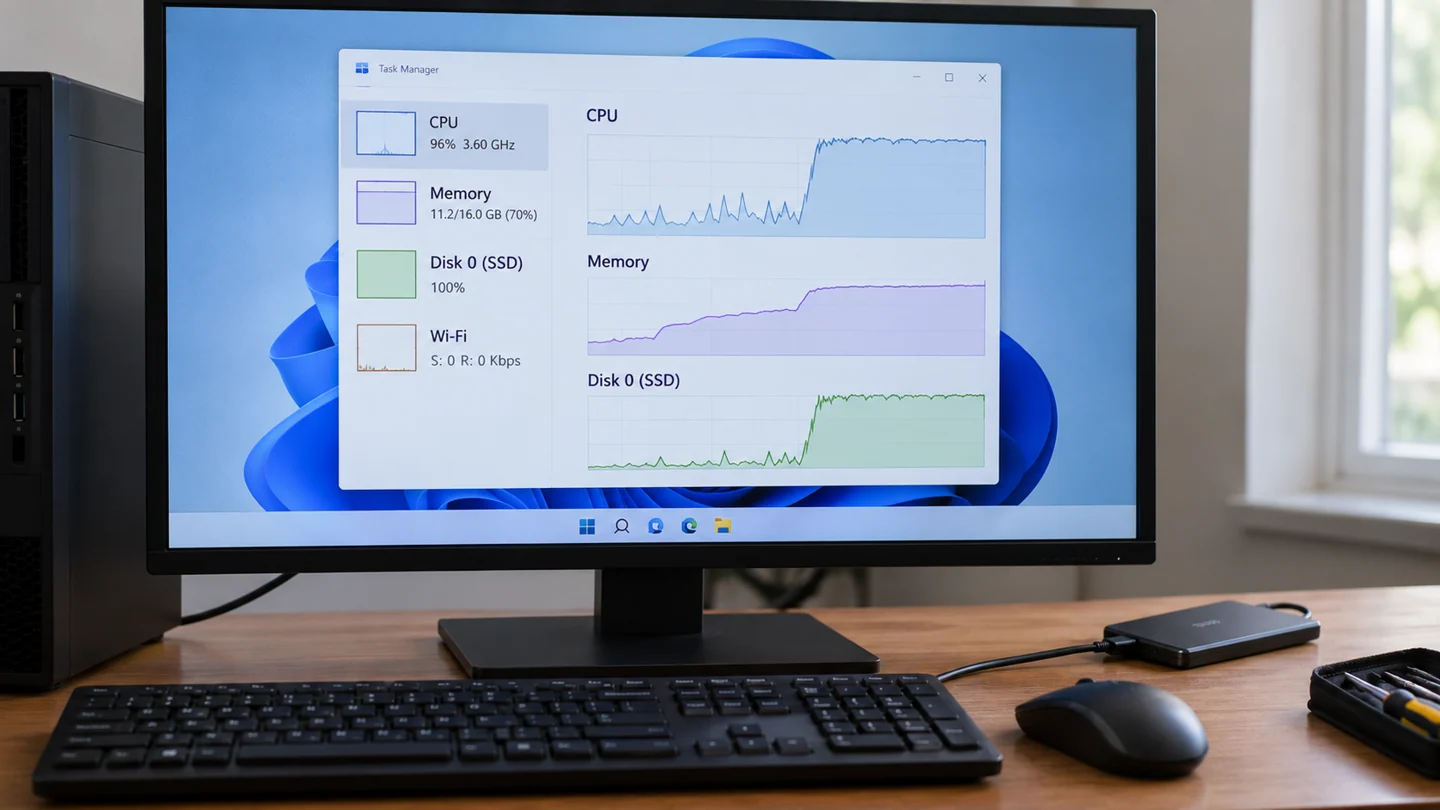
Check resource use while the slowdown occurs. Separate CPU, memory and storage pressure before buying upgrades or disabling services.
Understand the issue
This guide covers computer freezes randomly during work. The useful starting point is to establish what happens, when it happens and whether recent changes are involved. Keep the original symptom separate from a proposed repair: a symptom alone rarely identifies the exact part or setting at fault.
Useful details to discuss
- Check power and connections
- Observe error codes, beeps or indicator lights
- Test one component or peripheral at a time
- Protect important data before invasive troubleshooting
- Use professional diagnosis for board-level or electrical faults
Step-by-step checks
- Observe the busiest process during the fault.
- Check free space and legitimate background updates.
- Compare normal work after a restart.
Need help with this issue?
Share your model and symptoms. Confirm availability and the quote before booking.
What the results mean
High disk activity can be normal during updates, but repeated stalls and storage warnings need investigation. Avoid blanket service-disabling recipes.
| Stage | Action |
|---|---|
| Start | Observe the busiest process during the fault. |
| Compare | Check free space and legitimate background updates. |
| Next step | Compare normal work after a restart. |
Use a controlled Windows check before a broad reset
Record the Windows version, exact message and recent change before troubleshooting. A setting in Windows 10 can differ from its Windows 11 equivalent, and a work-managed PC may restrict options intentionally. Identify whether the issue affects one app, one account or the whole machine.
Make a small comparison that matches the symptom. Try the same task in another suitable app or with a known-good file where practical, and note what changes. Keep important work saved before restarting. If the computer is unstable or storage reports errors, preserve accessible data before long tests or major repairs. Screenshots should show the relevant message without passwords, recovery keys or unrelated private information.
Change one relevant setting or component at a time and repeat the original task. Prefer supported Windows and manufacturer tools over downloaded fix-all scripts or registry cleaners. A reset, reinstall or account removal can affect apps, settings and data, so it should be a deliberate later step with a verified recovery plan. After a correction, check normal restart, updates and required applications rather than stopping at a single successful click.
Before you finish
- Windows version and recent changes recorded
- One app or account distinguished from system-wide failure
- Important work protected before larger changes
- Original task and normal restart verified
Repair checklist
If you need help, send RJ Computers your device model and the results of the checks above. Explain what must be preserved before work starts, especially files that have no other copy.
- Confirm assessment charges and what the quote includes.
- Ask for approval before additional parts or destructive software changes.
- Test the original symptom at handover and keep the repair details.
Ready for an assessment?
Share your model and symptoms. Confirm availability and the quote before booking.
Frequently asked questions
Will more RAM fix every slow computer?
No. Storage, cooling, processor limits and background activity may be responsible.
What should I record before requesting help?
Record the full model, exact error or symptom, recent changes and what you already tried. Explain whether important files have a separate backup.
How do I arrange a repair assessment?
Call RJ Computers on +91 99715 24677 or use the WhatsApp booking button. Confirm availability, diagnostic fees and the scope of work before booking.
Conclusion
Start with the evidence and compare it with the symptom before choosing a repair. High disk activity can be normal during updates, but repeated stalls and storage warnings need investigation. Avoid blanket service-disabling recipes. If the checks do not explain the problem, share your observations and ask for an assessment before approving work.